
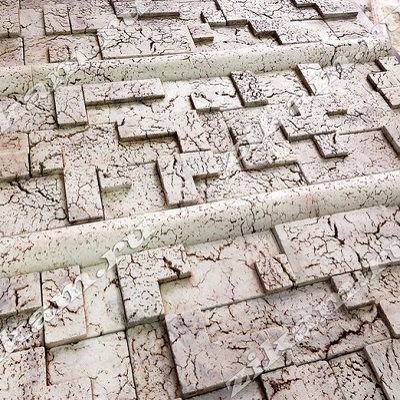
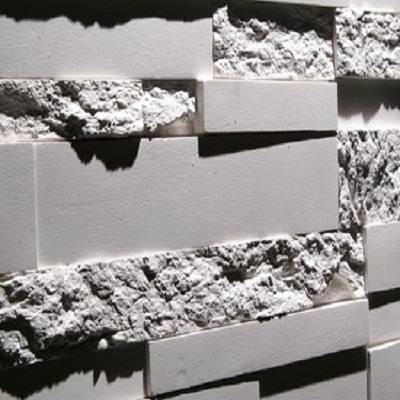
Consumers seek stones having the highest quality in tensile and compressive strength, diversity in design & colour with an affordable price tag. Factors that militate against the use of natural stone include low quality of natural stones; difficult long term adherence to the substrate; higher moisture absorption; low resistance to current climate changes; limited extraction sources; environmental factors; limited colours and designs; pollution permeation into internal tissues of stone and turbidity in the long term.
Prevalence of the above-mentioned factors makes high quality engineered stone a better option than natural stone.
Psalmstone is the prime innovation in the construction industry. it is a mix of mineral, natural and chemical-polymer materials that use the alteration in molecular tissues of Type 1 marble cement (crystallization) to cause polymerization reactions.
By changing molecular tissues, materials would be 2-3 times stronger than concrete and 2 times stronger than natural stones having high adherence and compressive strength, lower moisture absorption, resistance against turbidity into molecular tissues of stone among other qualities.
Furthermore, products are available in a vast spectrum due to the usage of various designs, colours thereby solving the traditional problem of natural stone.
Below is a table comparing the physical and mechanical characteristics of PsalmStone and Natural Stone.
Property |
Natural Stones |
Psalmstone |
Compressive strength |
200 – 400 kg/cm2 | 600 – 1000 kg/cm2 |
Tensile strength |
30 kg/cm2 | 60 – 150 kg/cm2 |
Abrasion resistance |
0.4 g/cm2 | Less than 2.2 g/cm2 |
Temperature resistance |
50 cycles | 500 cycles |
Water permeation |
1% – 15% | Less than 3% |
Density |
2700 kg/m3 | 2200 kg/m3 |